Contents
Introduction
Why Precision Matters in Modern Hose Cutting Operations
Mistake 1: Using the Wrong Type of Cutting Equipment
Mistake 2: Ignoring Hose Material and Reinforcement Structure
Mistake 3: Poor Measurement and Inconsistent Cutting Lengths
Mistake 4: Neglecting Blade Condition and Cutting Speed
Mistake 5: Overlooking Safety and Process Standardization
Conclusion
FAQ
Introduction
In industrial fluid transfer systems, Hose Cutting is far more than a preparatory step. It directly affects sealing performance, pressure resistance, assembly efficiency, and long-term reliability. Small inaccuracies during cutting can cascade into leaks, premature hose failure, or even serious safety incidents. As hydraulic and industrial hose systems become more complex, reliance on improvised or outdated cutting methods exposes operations to unnecessary risks. Professional saw-based solutions—ranging from advanced automated systems to robust manual benches—exist precisely to eliminate these risks. Understanding the most common hose cutting mistakes and how professional saws prevent them is essential for achieving consistency, safety, and operational efficiency.
Why Precision Matters in Modern Hose Cutting Operations
Precision is the foundation of effective Hose Cutting, especially in hydraulic and high-pressure industrial environments. A hose cut even slightly out of square can compromise fitting engagement, leading to micro-leaks that worsen under pressure cycling. Over time, these imperfections reduce system lifespan and increase maintenance costs.
Professional Industrial hose cutting equipment is designed to deliver repeatable accuracy across large production volumes. Unlike handheld tools, professional saws stabilize the hose, control blade speed, and maintain perpendicular cutting angles. This consistency becomes critical when dealing with reinforced hoses containing steel wire or textile layers, where uneven cuts can cause fraying and internal damage.
The table below highlights the operational differences between casual and professional cutting approaches:
| Cutting Aspect | Improvised Tools | Professional Saw Systems |
| Cut Accuracy | Inconsistent | High repeatability |
| Hose Deformation | Common | Minimal |
| Operator Safety | High risk | Controlled & shielded |
| Production Speed | Slow | Optimized |
| Waste Reduction | Poor | Significantly improved |
By investing in professional cutting processes, operators not only improve cut quality but also standardize outcomes, which is essential for scalable production and reliable assembly workflows.
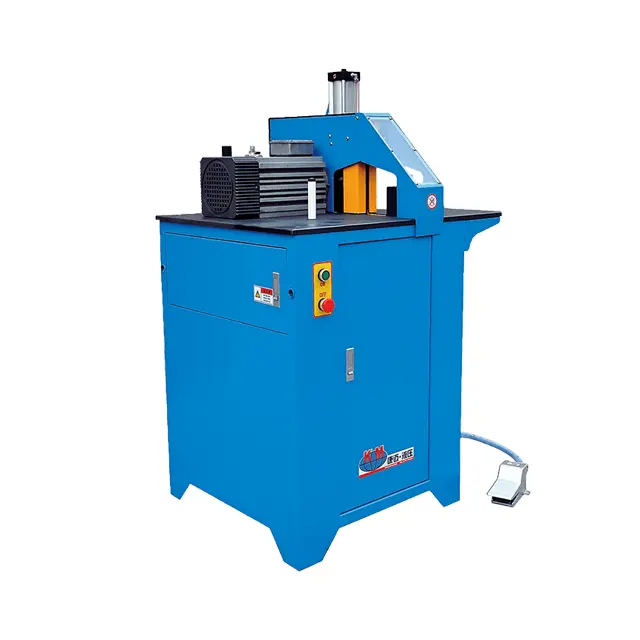
Mistake 1: Using the Wrong Type of Cutting Equipment
One of the most frequent Hose Cutting mistakes is relying on unsuitable tools that are not designed for industrial hose structures. Using grinders, hacksaws, or generic power tools may seem convenient, but these options lack the control and stability required for clean, square cuts.
Professional solutions such as a Hydraulic hose cutting machine or a Manual hose cutting bench are engineered specifically for hose materials. They secure the hose during cutting, reduce vibration, and ensure even blade penetration through multiple reinforcement layers. This prevents flattened ends, internal debris, and uneven surfaces that interfere with fitting installation.
Automatic systems further elevate accuracy. An Automatic hose cutting machine integrates preset lengths and controlled feed rates, eliminating operator guesswork. The result is uniform hose sections that meet exact specifications every time.
Avoiding this mistake starts with matching the equipment to your workload. Light-duty operations may benefit from manual benches, while high-volume environments demand automated or Multi-purpose hose cutting equipment capable of handling various diameters and materials without constant adjustments.
Mistake 2: Ignoring Hose Material and Reinforcement Structure
Not all hoses are created equal, yet many cutting errors occur when operators treat them as such. Rubber, thermoplastic, and composite hoses respond differently to blade pressure and speed. Reinforcement layers—whether textile braid or steel wire—introduce additional complexity.
Improper Hose Cutting techniques can cause wire separation, melted liners, or jagged edges, all of which compromise hose integrity. Professional saws allow precise control over cutting parameters, making it easier to adapt to different hose constructions.
Advanced Industrial hose cutting equipment often supports adjustable blade speeds and clamping pressure, ensuring clean cuts regardless of material. This adaptability is critical when switching between hose types within the same production cycle.
Understanding hose composition before cutting is essential. When paired with the right professional saw, this knowledge prevents internal damage, reduces scrap rates, and ensures that hoses perform as intended once installed.
Mistake 3: Poor Measurement and Inconsistent Cutting Lengths
Inconsistent hose lengths are a silent efficiency killer. Even minor deviations force rework, delay assembly, and increase material waste. Manual measuring methods, especially when repeated across shifts or operators, introduce variability that undermines quality control.
Professional Hose Cutting systems address this issue through mechanical stops, digital measurement guides, or automated length programming. An Automatic hose cutting machine eliminates subjective judgment by cutting hoses to predefined lengths with minimal tolerance variation.
Consistency is especially important in OEM or batch production environments, where hoses must fit standardized assemblies. Using professional saws ensures that each cut aligns with design specifications, improving downstream efficiency and reducing costly adjustments during installation.
By standardizing measurement processes through professional equipment, businesses achieve predictable outcomes that support lean manufacturing principles.
Mistake 4: Neglecting Blade Condition and Cutting Speed
Even the most advanced Hose Cutting equipment can produce poor results if blade maintenance is ignored. Dull or damaged blades tear rather than cut, leading to frayed reinforcement layers and excessive heat buildup.
Professional saw systems are designed for controlled cutting speeds that match blade condition and hose material. Many Multi-purpose hose cutting equipment setups allow operators to fine-tune speed settings, balancing efficiency with cut quality.
Routine blade inspection and replacement are essential practices. Sharp blades reduce cutting force, minimize hose deformation, and extend equipment lifespan. When combined with appropriate speed control, professional saws deliver smooth, contamination-free cuts that protect hose performance.
Ignoring blade maintenance not only affects quality but also increases operator fatigue and safety risks, making it a critical area for operational discipline.
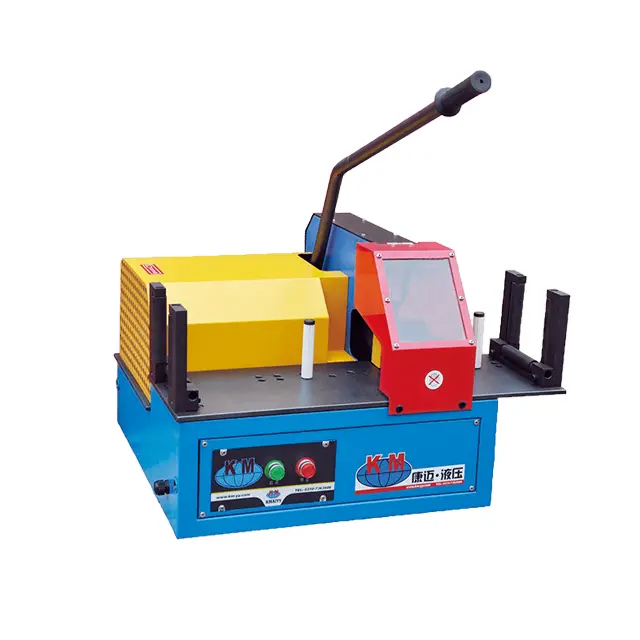
Mistake 5: Overlooking Safety and Process Standardization
Safety is often underestimated in Hose Cutting operations, particularly when improvised tools are involved. Flying debris, unstable hoses, and uncontrolled blade exposure pose serious risks to operators.
Professional saw-based solutions integrate safety guards, secure clamping mechanisms, and controlled cutting zones. Whether using a Manual hose cutting bench or fully automated equipment, these features significantly reduce accident potential.
Standardized processes further enhance safety and quality. Documented cutting procedures, consistent equipment settings, and operator training ensure that every cut meets the same standards. Professional Industrial hose cutting equipment supports this standardization by reducing variability and human error.
Prioritizing safety is not just a compliance measure—it directly contributes to productivity by minimizing downtime, injuries, and rework.
Conclusion
Effective Hose Cutting is a cornerstone of reliable hose assembly and system performance. The five common mistakes outlined—incorrect equipment selection, ignoring material structure, inconsistent measurements, poor blade maintenance, and inadequate safety practices—are all preventable with professional saw solutions. By adopting purpose-built cutting equipment and standardized processes, operations achieve cleaner cuts, safer workflows, and higher overall efficiency. Professional saws transform hose cutting from a risk-prone task into a controlled, repeatable, and value-driven process.
FAQ
Q1: Why is professional equipment important for Hose Cutting?
Professional equipment ensures accurate, square cuts, reduces waste, improves safety, and supports consistent production quality.
Q2: Can one machine handle different hose types?
Yes, Multi-purpose hose cutting equipment is designed to adapt to various diameters and materials with adjustable settings.
Q3: Is manual cutting still suitable for small operations?
A Manual hose cutting bench can be effective for low-volume tasks when precision and safety features are in place.
Q4: How often should cutting blades be replaced?
Blade replacement depends on usage and material type, but regular inspection is essential to maintain cut quality.
Q5: What is the biggest risk of improper Hose Cutting?
Improper cutting can lead to leaks, reduced hose lifespan, safety hazards, and increased operational costs.


