Contents
Introduction
Why Speed and Automation Matter in a Modern Nut Crimping Machine
Feature 1: High-Speed Crimping Capacity Without Accuracy Loss
Feature 2: Automatic Feeding and Positioning Systems
Feature 3: High Precision Crimping Control and Repeatability
Feature 4: Heavy Duty Structural Design for Industrial Use
Feature 5: Intelligent Control Systems and Process Monitoring
Feature 6: Tooling Flexibility and Material Compatibility
Feature 7: Safety, Maintenance Efficiency, and Long-Term Reliability
Conclusion
FAQ
Introduction
A high-speed automatic Nut Crimping Machine is a critical investment for manufacturers that rely on consistent fastening quality, production efficiency, and long-term operational stability. As production volumes rise and tolerance requirements tighten, traditional or semi-automatic solutions struggle to deliver both speed and precision at scale. Selecting the right machine is no longer about basic crimping capability—it is about identifying advanced features that directly support productivity, quality assurance, and cost control.
This article focuses exclusively on the top 7 features that define a truly capable Automatic, High speed, and High precision Nut Crimping Machine, helping decision-makers evaluate machines based on real-world manufacturing demands rather than generic specifications.
Why Speed and Automation Matter in a Modern Nut Crimping Machine
High-speed automation fundamentally changes how crimping operations integrate into industrial production lines. A modern High speed Nut Crimping Machine eliminates bottlenecks caused by manual loading, inconsistent force application, and operator fatigue. Automation ensures that each crimp cycle is executed with identical parameters, supporting uniform quality across thousands—or millions—of fasteners.
From an operational perspective, automation also reduces dependency on skilled manual labor while improving takt time. Compared to Manual hydraulic or semi-automatic systems, automatic machines provide measurable gains in output per hour, lower rejection rates, and improved traceability. These advantages make automation not optional, but essential, in industries where speed and repeatability define competitiveness.
Feature 1: High-Speed Crimping Capacity Without Accuracy Loss
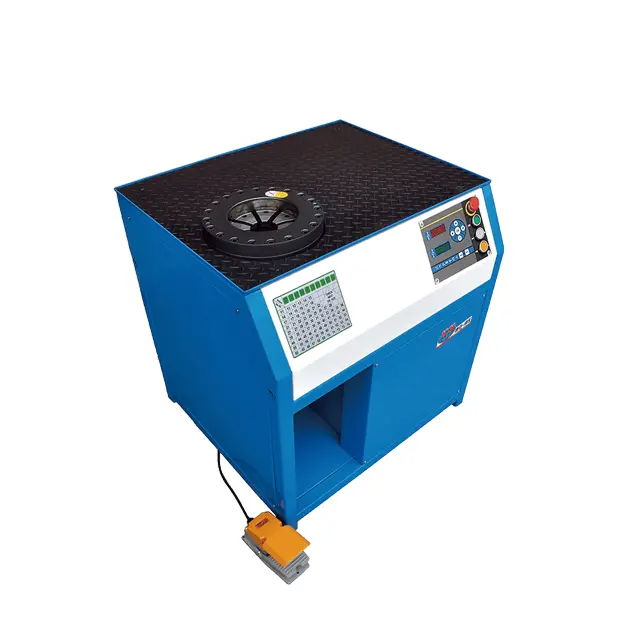
The first and most obvious feature to evaluate is raw crimping speed—but speed alone is meaningless without control. A well-designed High speed Nut Crimping Machine must maintain crimp depth, compression force, and alignment accuracy even at elevated cycle rates.
Advanced machines achieve this balance through synchronized servo systems, rigid mechanical frames, and optimized motion profiles. Unlike older Manual hydraulic Nut Crimping Machine designs that rely on operator timing, high-speed automatic systems deliver precise force curves on every cycle. This ensures that productivity gains do not come at the expense of joint integrity or long-term reliability.
Key performance indicators to evaluate include:
| Performance Metric | Why It Matters |
| Cycles per minute | Directly impacts production throughput |
| Force consistency | Ensures uniform crimp quality |
| Position repeatability | Prevents misalignment and rework |
| Thermal stability | Maintains accuracy during continuous operation |
A machine that combines speed with precision provides scalable output without introducing hidden quality risks.
Feature 2: Automatic Feeding and Positioning Systems
Automatic feeding is a defining characteristic of an advanced Automatic Nut Crimping Machine. Integrated feeders eliminate manual handling, ensuring nuts are consistently oriented, positioned, and delivered to the crimping station without interruption.
High-quality feeding systems reduce jams, misfeeds, and cycle delays—issues that often plague lower-end or retrofitted automation solutions. Precision positioning mechanisms further ensure that each nut is aligned perfectly with the crimping tool, which is especially critical when working with tight tolerances or small-diameter fasteners.
For Industrial Nut Crimping Machine applications, reliable feeding directly translates into higher uptime, reduced scrap rates, and predictable production scheduling.
Feature 3: High Precision Crimping Control and Repeatability
Precision is the defining feature that separates basic automation from advanced manufacturing equipment. A High precision Nut Crimping Machine must offer tight control over crimp force, displacement, and dwell time.
Repeatability is particularly important in regulated or safety-critical industries where inconsistent crimps can lead to product failure. Advanced control systems allow manufacturers to store, recall, and fine-tune crimping parameters for different fastener types, materials, or assemblies. This flexibility reduces setup time while ensuring consistent results across production runs.
Precision control also supports statistical process monitoring, enabling early detection of tool wear or material variation before defects occur.
Feature 4: Heavy Duty Structural Design for Industrial Use
A Heavy duty Nut Crimping Machine is built to operate continuously under high loads without deformation or vibration. Structural rigidity is essential for maintaining alignment and precision, especially at high speeds.
Industrial-grade frames, reinforced guide rails, and hardened components ensure long service life even in demanding production environments. Lightweight or under-engineered machines may meet short-term needs but often suffer from accuracy drift, increased maintenance, and premature failure.
For manufacturers planning long-term deployment, heavy-duty construction is not a luxury—it is a prerequisite for reliable high-speed operation.
Feature 5: Intelligent Control Systems and Process Monitoring
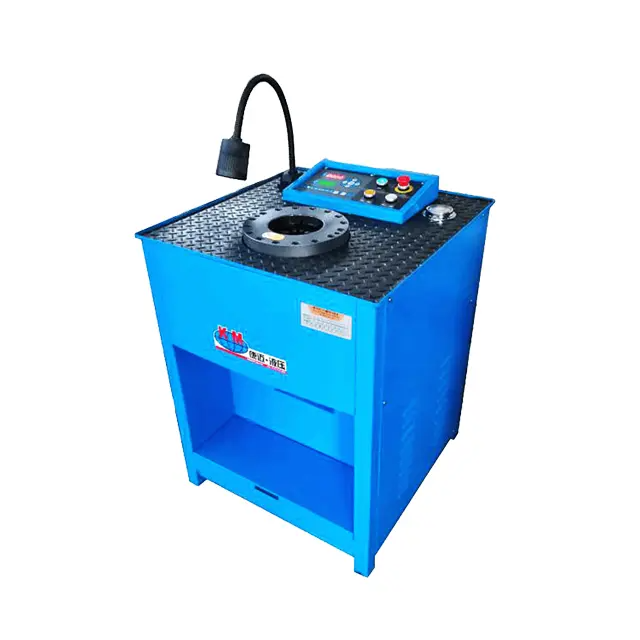
Modern Industrial Nut Crimping Machine designs incorporate intelligent control platforms that go far beyond basic operation. Real-time monitoring of force curves, cycle counts, and fault conditions provides operators with actionable insights into machine performance.
These systems support preventive maintenance, quality documentation, and process optimization. When deviations occur, alarms and automatic stops prevent defective parts from advancing downstream. Intelligent controls also simplify integration with automated production lines, enabling synchronized operation with upstream and downstream equipment.
Feature 6: Tooling Flexibility and Material Compatibility
A versatile Nut Crimping Machine must handle a wide range of nut sizes, materials, and applications without extensive reconfiguration. Quick-change tooling systems reduce downtime when switching between product variants, supporting flexible manufacturing strategies.
Material compatibility is equally important. Whether working with steel, aluminum, or specialty alloys, the machine must apply controlled force without damaging threads or surrounding components. Machines designed for both High speed and High precision operation excel in maintaining consistency across diverse materials.
Feature 7: Safety, Maintenance Efficiency, and Long-Term Reliability
Safety is inseparable from productivity in high-speed environments. An advanced Automatic Nut Crimping Machine incorporates protective enclosures, interlocks, and emergency stop systems that protect operators without hindering workflow.
Maintenance efficiency also plays a critical role in total cost of ownership. Machines designed for easy access, modular components, and clear diagnostics minimize downtime and extend service intervals. Over time, these features significantly reduce operating costs while preserving performance.
Conclusion
Selecting the right Nut Crimping Machine requires a clear understanding of how specific features support high-speed, high-precision manufacturing goals. The seven features outlined above—speed with accuracy, automatic feeding, precision control, heavy-duty construction, intelligent monitoring, tooling flexibility, and robust safety—define the performance standard for modern automatic crimping solutions.
By focusing on these capabilities rather than superficial specifications, manufacturers can invest in equipment that delivers long-term productivity, consistent quality, and scalable growth.
FAQ
Q1: What distinguishes a high-speed automatic Nut Crimping Machine from manual systems?
A high-speed automatic system delivers significantly higher output, better repeatability, and reduced labor dependency compared to Manual hydraulic Nut Crimping Machine solutions.
Q2: Is high precision achievable at high crimping speeds?
Yes. A properly engineered High precision Nut Crimping Machine maintains tight tolerances even at elevated cycle rates through advanced control systems and rigid mechanical design.
Q3: Why is heavy-duty construction important?
A Heavy duty Nut Crimping Machine ensures long-term accuracy, reduces vibration, and supports continuous industrial operation without performance degradation.
Q4: Can one machine handle different nut sizes and materials?
Machines with flexible tooling and programmable parameters are designed to support multiple applications, making them ideal for varied production needs.


