Contents
Introduction
Why Safety-Focused Maintenance Matters for Hose Cutting and Skiving Equipment
Daily Inspection Routines That Prevent Serious Accidents
Precision Blade and Tool Care for High-Risk Operations
Managing Debris, Dust, and Material Residue for a Safer Workspace
Lubrication, Calibration, and Alignment: Reducing Mechanical Stress
Electrical, Hydraulic, and Pneumatic System Safety Checks
Training, Documentation, and Long-Term Maintenance Planning
Conclusion
FAQ
Introduction
Industrial hose processing environments demand a balance between productivity and risk control. Hose Cutting and Skiving Equipment operates with sharp blades, rotating components, high torque, and compressed systems, all of which introduce safety hazards when maintenance is neglected. A structured, safety-first maintenance strategy not only protects operators but also preserves cutting accuracy, extends equipment lifespan, and stabilizes operational output. This article focuses on practical, field-tested maintenance approaches designed to reduce accidents, maintain performance, and ensure compliance in industrial hose fabrication settings.
Why Safety-Focused Maintenance Matters for Hose Cutting and Skiving Equipment
Safety-driven maintenance is not a secondary task; it is a core operational requirement for Industrial Hose Cutting and Skiving Equipment. Equipment failures rarely occur without warning—most accidents are preceded by subtle signs such as vibration, uneven cuts, abnormal noise, or delayed response times. Ignoring these indicators significantly increases the likelihood of operator injury and material waste.
From a safety perspective, worn blades, loose guards, and misaligned components expose operators to laceration and entanglement risks. From an operational standpoint, poorly maintained systems compromise cut squareness, skive depth consistency, and hose end integrity. Maintenance directly influences how predictable and controllable the machine remains during use.
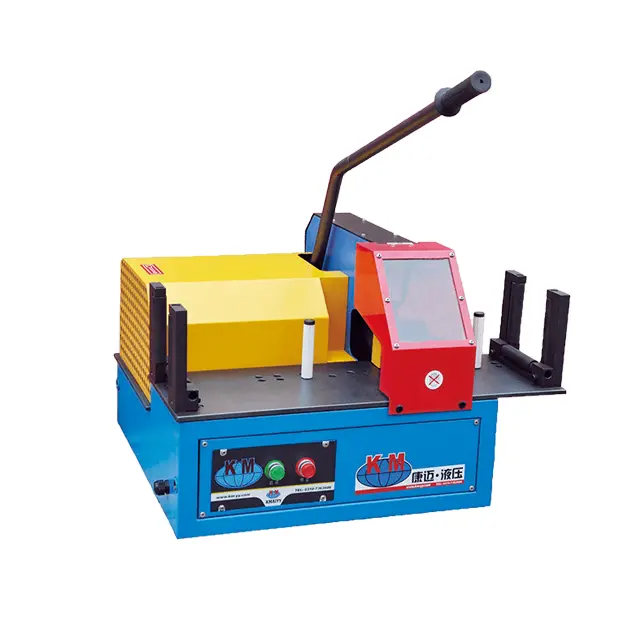
Modern Integrated Hose Cutting and Skiving Equipment often combines multiple operations within a single workstation. While this improves efficiency, it also increases system complexity. A single neglected component can cascade into broader system instability. Safety-focused maintenance ensures that each subsystem—mechanical, electrical, and pneumatic—functions within designed tolerances, minimizing unpredictable behavior during operation.
Daily Inspection Routines That Prevent Serious Accidents
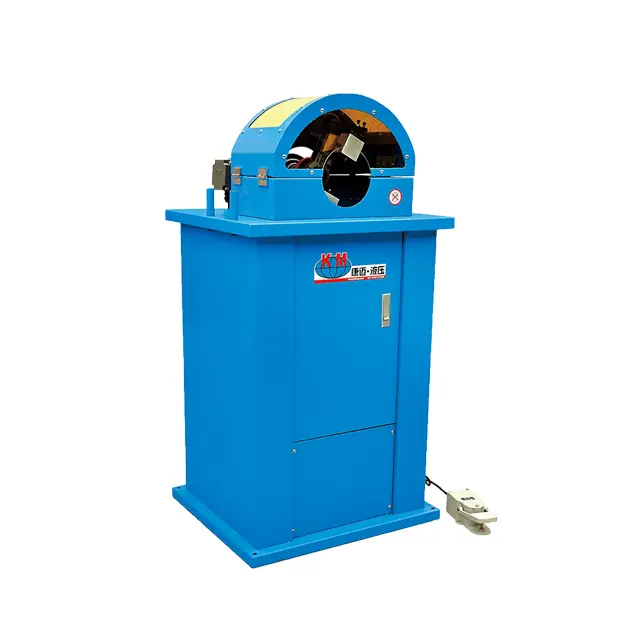
Daily inspections form the first line of defense against equipment-related injuries. Before operation begins, visual and tactile checks should confirm that guards, shields, and emergency stops are intact and functional. This practice is especially critical for Vertical Hose Cutting and Skiving Equipment, where gravity and rotation introduce additional hazard vectors.
Operators should verify that blades are securely mounted, cutting tables are clean, and clamps or fixtures engage correctly. Even minor looseness can cause hose slippage, leading to uneven cuts or sudden kickback. Control panels should be checked for responsive buttons, intact wiring insulation, and legible safety labels.
The following table outlines high-priority daily inspection points and their safety implications:
| Inspection Area | What to Check | Safety Impact |
| Cutting blade | Sharpness, secure mounting | Prevents tearing and sudden blade grab |
| Skiving tool | Alignment and depth control | Avoids over-skiving and hose failure |
| Guards & covers | Proper placement | Reduces contact with moving parts |
| Emergency stop | Immediate response | Enables rapid shutdown in emergencies |
| Work surface | Cleanliness | Prevents slips and misalignment |
Consistent inspections reinforce operator awareness and create a proactive safety culture around High Precision Hose Cutting and Skiving Equipment.
Precision Blade and Tool Care for High-Risk Operations
Blades and skiving tools are the most dangerous components of Hose Cutting and Skiving Equipment, making their maintenance a top safety priority. Dull or damaged blades require increased force to cut, raising the risk of sudden material release or blade deflection. Regular sharpening or replacement ensures clean, controlled cuts with minimal operator strain.
Tool holders and spindles must be checked for runout and wear. Even slight eccentricity can cause vibration, accelerating fatigue in surrounding components. For Custom Hose Cutting and Skiving Equipment, where hose specifications vary frequently, adjustable tooling must be recalibrated after each changeover to avoid depth errors that could weaken hose reinforcement layers.
Proper storage of spare blades and tools also matters. Unprotected edges pose a handling hazard and degrade faster due to corrosion or micro-chipping. Using designated storage racks and protective covers reduces injury risk while maintaining tool integrity.
Managing Debris, Dust, and Material Residue for a Safer Workspace
Hose cutting and skiving generate rubber particles, wire fragments, and fine dust that can compromise both safety and equipment performance. Accumulated debris obstructs moving parts, interferes with sensors, and increases slip hazards around the workstation. For Multi-functional Hose Cutting and Skiving Equipment, debris management is especially critical because multiple processes occur in close proximity.
Daily cleaning routines should include vacuum extraction of dust, removal of wire remnants, and wiping of contact surfaces. Compressed air should be used cautiously, as it can aerosolize fine particles and push debris deeper into mechanical assemblies. Where possible, integrated extraction systems should be maintained and filters replaced according to usage intensity.
A clean environment improves visibility, reduces fire risk from combustible dust, and ensures that safety markings remain visible. Over time, disciplined debris management significantly lowers unplanned downtime and injury incidents.
Lubrication, Calibration, and Alignment: Reducing Mechanical Stress
Mechanical stress is a silent contributor to safety incidents. Inadequate lubrication increases friction, leading to overheating, component seizure, and unexpected motion. All moving assemblies within Hose Cutting and Skiving Equipment should follow a documented lubrication schedule using appropriate industrial lubricants.
Calibration and alignment are equally important. Misaligned cutting heads or skiving tools introduce side loads that strain bearings and shafts. For High Precision Hose Cutting and Skiving Equipment, even minimal deviation affects both safety and output quality. Regular calibration ensures that depth controls, stops, and guides operate within specified tolerances.
Alignment checks should include verification of parallelism between cutting surfaces and guides. Addressing alignment issues early prevents catastrophic mechanical failure and maintains predictable machine behavior, which is essential for operator confidence and safety.
Electrical, Hydraulic, and Pneumatic System Safety Checks
Beyond mechanical components, auxiliary systems present significant safety considerations. Electrical enclosures should remain sealed, dry, and free from dust ingress. Loose terminals or damaged insulation can cause erratic machine response or electrical shock hazards.
Hydraulic and pneumatic systems must be inspected for leaks, pressure irregularities, and hose degradation. A sudden pressure loss or hose rupture can cause uncontrolled movement or flying debris. In Integrated Hose Cutting and Skiving Equipment, where multiple systems interact, pressure imbalances may affect tool timing and clamping force.
Routine system checks should include pressure gauge verification, valve responsiveness, and controlled startup tests. Maintaining these systems ensures stable operation and reduces emergency shutdown scenarios.
Training, Documentation, and Long-Term Maintenance Planning
Even the best maintenance procedures fail without proper human execution. Operators and technicians must be trained not only on machine use but also on safety-oriented maintenance principles. Understanding why a task matters increases compliance and attentiveness.
Clear documentation supports consistency. Maintenance logs help identify recurring issues, while standardized checklists ensure no safety-critical step is overlooked. For facilities using Custom Hose Cutting and Skiving Equipment, documentation becomes essential due to non-standard configurations.
Long-term planning includes scheduled overhauls, spare parts management, and periodic safety audits. This structured approach transforms maintenance from a reactive necessity into a strategic safety asset.
Conclusion
A safety-first maintenance strategy is fundamental to the reliable operation of Hose Cutting and Skiving Equipment. By prioritizing inspections, tool care, cleanliness, system calibration, and operator training, organizations significantly reduce accident risk while preserving precision and productivity. Maintenance is not merely about keeping machines running—it is about ensuring that every operation remains controlled, predictable, and safe over the long term.
FAQ
1.How often should hose cutting and skiving equipment be inspected?
Basic safety inspections should be performed daily, with deeper mechanical and system checks conducted weekly or monthly depending on usage intensity.
2.Why is blade maintenance so critical for safety?
Sharp, well-aligned blades reduce cutting force requirements, minimizing the risk of sudden material release or operator injury.
3.Does debris buildup really affect safety?
Yes. Accumulated debris increases slip hazards, obscures controls, interferes with moving parts, and can contribute to overheating or fire risk.
4.Is operator training part of maintenance?
Absolutely. Well-trained operators are more likely to detect early warning signs and follow safety-critical maintenance procedures correctly.


