Purchasing a hydraulic hose crimper remains a massive capital investment for any industrial operation. It directly dictates your daily production uptime, overall operator safety, and strict end-product compliance. However, navigating today’s equipment market presents a deeply frustrating challenge for most buyers. Countless white-label resellers actively pose as direct factories online. You often find it incredibly difficult to separate genuine manufacturing quality from basic, low-tier assembly operations. Falling for a reseller trap usually leads to dangerous micro-leaks, blown fittings, and financially crippling machinery downtime. This comprehensive guide provides you with a highly skeptical, evidence-based evaluation framework. We will move far beyond simple marketing brochures and spec sheets to uncover real value. You will discover exactly how to assess long-term operational reliability, critical tooling quality, and robust after-sales infrastructure. By the end, you will possess the exact tools needed to make a highly informed, reliable purchasing decision.
Key Takeaways
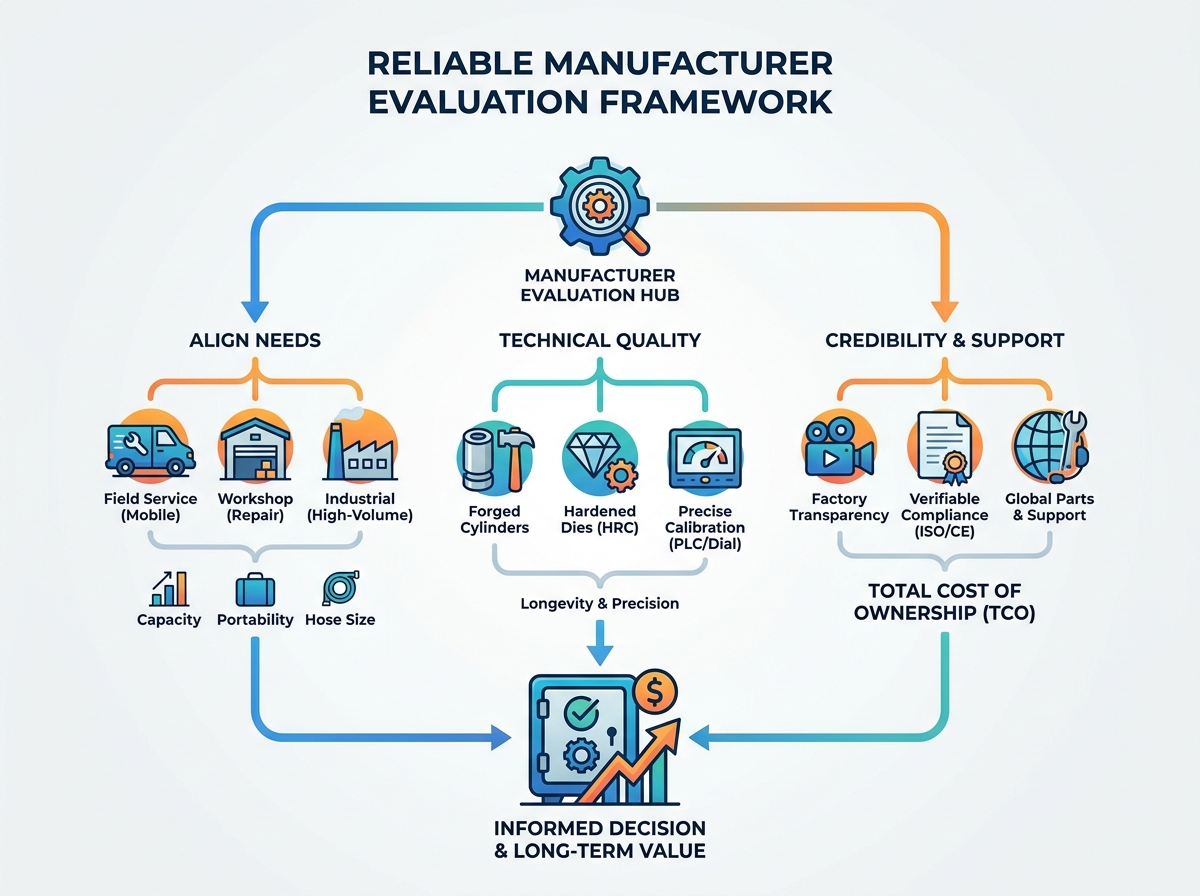
Identify whether the supplier is a genuine manufacturer or a reseller by demanding facility transparency and verifiable compliance certificates (CE/ISO).
Match your specific operational environment (field service, workshop, or high-volume industrial) to the manufacturer’s core production competencies.
Evaluate technical non-negotiables: forged steel cylinders, proprietary die-hardening processes, and precise calibration systems (micro-dial or PLC).
Factor Total Cost of Ownership (TCO) by assessing the manufacturer's spare parts availability, technical support response times, and warranty realities.
Aligning Machine Categories With Your Business Needs
Before you vet any supplier, you must clearly define your operational success criteria. You need to establish your required production capacity, portability needs, and maximum hose sizes. Manufacturers usually specialize in specific equipment tiers. We highly recommend matching your exact operational environment to the factory's core production competencies. A supplier excelling in massive industrial machines might produce terrible mobile units.
Application Environment
Primary Power Source
Max Hose Capacity (Typical)
Key Evaluation Metric
Field Service & Mobile Units
12V/24V DC or Manual Hand Pump
1" to 1.5" Multi-spiral
Weight-to-power ratio & weatherproofing
Workshop & Repair Centers
1-Phase / 3-Phase AC
Up to 2" (4SP/6SP)
Die versatility & footprint efficiency
Industrial OEM Production
3-Phase AC (CNC/PLC)
2" to 6"+ Industrial hoses
Cycle time & cooling system efficiency
Field Service & Mobile Units
Mobile units focus heavily on 12V/24V DC or manual operations. You rely on them for urgent on-site repairs in remote locations. You must carefully assess the weight-to-power ratio engineering. Heavy machines make field service miserable for technicians who carry them across uneven terrain. Examine battery efficiency and hydraulic pump reliability under harsh environmental conditions. Dirt, excessive moisture, and extreme temperature fluctuations will test these mobile components daily. Best practices dictate testing the manual pump lever resistance. High resistance indicates poor internal fluid dynamics. Operators will fatigue quickly if the manual pump requires excessive physical force. Always check if the mobile unit includes a protective carrying case. Verify if the electrical components carry proper IP weatherproofing ratings to survive rain exposure during field emergencies.
Workshop & Hydraulic Repair Centers
Repair centers primarily rely on standard 1-phase or 3-phase machines. They typically handle up to 2-inch 4SP or 6SP multi-spiral hoses. You should rigorously evaluate the versatility of the included standard die sets. Quick-change tools save operators massive amounts of time during busy shifts. Consider the physical machine footprint very carefully. Floor space remains a premium asset in most busy workshops. A poorly designed, bulky machine disrupts the natural workflow of your technicians. Common mistakes include ignoring the machine's ergonomic height and safety features. Operators bending over repeatedly will experience severe back strain. Choose equipment designed for comfortable bench-top operation. Ensure the machine features accessible emergency stop buttons and shrouded foot-pedal controls to prevent accidental activation.
Industrial High-Volume Production
Industrial manufacturing settings demand CNC or PLC controlled crimpers. They handle continuous, high-speed OEM production runs daily. Cycle times dictate your overall profitability and throughput here. You must evaluate the cooling system efficiency extensively. Overheated hydraulic fluid quickly destroys internal rubber seals and halts production entirely. Look for machines featuring dual-fan radiators or advanced water-cooling loops. Ensure seamless network integration capabilities. Your crimper might need to connect seamlessly with automated cutting and skiving lines. We advise checking the software interface for data logging features. Data logging helps you track individual crimp parameters for strict quality assurance audits. It provides undeniable proof of compliance if a client questions your hose assembly integrity. Advanced PLCs even feature preventative maintenance alerts to notify operators before mechanical failures occur.
Core Technical Evaluation Criteria: Look Beyond the Spec Sheet
Visual similarities often hide massive underlying differences across brands. You cannot judge a complex machine solely by its exterior paint job. Metallurgical quality and machining precision dictate long-term survival. Many cheap machines look identical to premium models on a computer screen.
Cylinder and Forging Quality
Always look for forged steel cylinders rather than cheaper cast iron alternatives. Cast components inherently contain hidden microscopic impurities. They remain highly prone to sudden micro-fractures under high-pressure, repetitive crimping cycles. Forged steel absorbs extreme radial forces highly effectively. It ensures your heavy machinery survives years of heavy industrial abuse. Top-tier manufacturers routinely use ultrasonic non-destructive testing on their cylinders. This ensures zero internal voids exist within the steel block. You can often spot cheap cast iron by its rougher surface texture beneath the paint. Do not compromise on cylinder integrity. A cracked cylinder renders the entire machine completely useless and poses a severe safety hazard to operators standing nearby.
Die Hardness and Machining
Evaluate the underlying heat-treatment processes of the factory thoroughly. Dies must possess exceptionally high Rockwell hardness (HRC). High HRC prevents structural deformation over thousands of repetitive crimp cycles. Assess the core base material carefully. Cr12MoV or equivalent premium tool steels offer far superior longevity. Cheap carbon steel dies warp quickly and ruin your expensive hose assemblies. You will start noticing uneven crimp diameters if your dies warp. This leads directly to dangerous fluid leaks in the field. Ask the supplier for specific metallurgical testing reports. Reputable factories gladly provide documentation proving their steel sourcing and hardening parameters.
Control Systems and Calibration
Compare traditional micro-dial micrometers against modern digital touchscreens. Micro-dials offer rugged simplicity for dirty environments. PLC touchscreens provide unparalleled precision for complex assemblies. For high-end applications, verify specific PLC software capabilities. Ask if the system actively offers pressure-based crimping. Check for advanced diameter-based crimping and customizable step-crimping features. Advanced digital controls eliminate dangerous operator guesswork and drastically reduce material scrap rates. Watch out for proprietary software that requires expensive annual licensing fees. You want an open system that receives free updates. A well-designed PLC interface should feel intuitive for a first-year technician to learn quickly.
Assessing the Hose Crimping Machine Manufacturer's Credibility
You must verify supplier authority and trustworthiness rigorously. This vital step prevents you from dealing with hidden, low-value intermediaries masquerading as direct factories.
Factory Verification & Transparency
Request live video walk-throughs immediately during your initial vetting. Ask to see their active CNC machining centers. Observe their actual assembly lines and quality testing facilities. True manufacturers always welcome comprehensive virtual or physical factory audits. Check their dedicated in-house research and development capabilities. Ask if they can engineer custom dies for highly non-standard fittings. A legitimate hose crimping machine manufacturer will easily produce custom tooling for specialized automotive suspension hoses, steel wire ropes, or delicate Teflon hoses. Resellers usually freeze when asked for custom engineering because they lack an engineering department entirely.
Compliance and Certifications
Demand authentic, verifiable ISO 9001 quality management certificates. Do not accept blurry photocopies or expired documents. Ensure highly reputable third-party testing bodies issue their CE declarations. These declarations must explicitly cover European machinery safety directives. They must also strictly cover electromagnetic and electrical compliance standards. Fake compliance certificates run rampant in the global machinery export market. Always verify document registration numbers directly with the issuing agency website. Operating uncertified machinery exposes your business to massive legal liabilities if a workplace injury occurs.
After-Sales Support, Spare Parts, and Implementation Realities
The true cost of industrial equipment becomes painfully apparent during unexpected breakdowns. You must evaluate the supplier's post-purchase infrastructure aggressively.
Global Supply Chain and Parts Availability
Ask specific questions about their wearing parts inventory. Replacement springs, internal seals, and standard die sets must ship immediately upon request. Find out if they utilize internationally recognized hydraulic and electrical components. Rexroth valves and Siemens electronics remain incredibly easy to source locally. Local availability saves you weeks of agonizing shipping delays. Proprietary electronics often turn a slightly broken machine into useless scrap metal. Avoid machines that use obscure, unbranded circuit boards. You will wait months for a simple replacement relay if the factory experiences supply chain issues.
Technical Support and Training
Assess the exact quality of their provided operation manuals. Poorly translated manuals often lack crucial safety context. Check for extensive digital video libraries. You need clear, high-definition videos detailing exact calibration procedures. Routine oil changes and basic electrical troubleshooting require excellent visual guidance. Verify their actual communication responsiveness for business support. Timezone alignment matters deeply when production halts completely. Send a highly technical question during their working hours. Measure exactly how long they take to provide a competent, engineering-level answer.
Shortlisting Logic: A Buyer’s Checklist for Sourcing
Value and Long-term Returns vs. Upfront Price: Cheap machines frequently lead to incredibly expensive hose failures. Calculate your real return on investment carefully. Base your financial math on die longevity, proven machine uptime, and saved daily labor hours. A highly reliable supplier helps you maximize long-term operational efficiency. Buying the absolute cheapest option guarantees you will buy a replacement machine within two years.
The Sample Test: Use this proven method for specialized applications. Ask the factory to physically crimp a sample of your exact hose and fitting combination. Have them ship the finished assembly back alongside an unedited process video. Request a formal, signed pressure-test report. This undeniably proves their equipment actually handles your specific materials without struggling. It eliminates all theoretical marketing claims immediately.
Warranty Terms: Scrutinize the actual warranty coverage closely. A heavily advertised extended warranty often proves completely useless in practice. It might cleverly exclude the hydraulic pump, the electric motor, and the dies entirely. Some deceptive policies require shipping a 300kg machine back to an overseas factory. You pay the massive freight costs in both directions. Read the fine print thoroughly before signing anything. If you need clarity on how international support actually works, you can always contact us to request a fully transparent breakdown of standard industry support policies.
Conclusion
Selecting the right manufacturing partner requires careful, deliberate balancing. You must weigh immediate budgetary constraints directly against long-term operational resilience. Following a strict evaluation protocol protects your capital investment.
Next Steps:
Build a tight shortlist of three to four potential manufacturers using the technical criteria detailed above.
Initiate contact by requesting a highly customized tooling list based on your most frequently used hose specifications.
Gauge the technical depth, clarity, and transparency of their initial response.
Request undeniable video proof of their physical machining facilities and live inventory storage.
Demand verifiable compliance documents and check them against global databases.
Take your time during this crucial evaluation phase. Rushing this important decision often guarantees future production headaches and compromised safety.
FAQ
Q: How long should hydraulic crimping dies typically last?
A: It varies by usage and material. High-quality Cr12MoV dies from a reputable manufacturer should easily exceed 100,000 to 500,000 cycles if properly lubricated and maintained. Operators must apply specialized die grease regularly. Keeping the die surfaces completely free of abrasive metal dust significantly extends their lifespan and prevents premature wear.
Q: Can a manufacturer provide custom dies for non-hydraulic applications?
A: Yes, direct manufacturers with in-house CNC capabilities can design custom profiles. They routinely engineer specialized dies for automotive AC hoses, industrial cables, metal pipes, and scaffolding tubes based on your exact specifications. You simply provide the un-crimped and crimped dimensions, and their engineering team will machine the precise geometry.
Q: What is the standard lead time for industrial hose crimpers?
A: Standard workshop machines are often in stock and ship within 7 to 15 days. Large industrial or custom PLC machines typically require 30 to 45 days. This extended timeframe allows for complete manufacturing, software programming, custom die machining, and rigorous pressure testing prior to securing the crate for shipment.
Q: Why is the distinction between a manufacturer and a trading company important?
A: Trading companies add unnecessary margin and have limited control over quality consistency. They rarely possess deep technical knowledge and struggle to provide troubleshooting guidance. A direct factory guarantees better long-term spare parts continuity. You receive direct engineering support when complex operational issues arise, eliminating middleman communication delays.
Handanshi Kangmai Hydraulic Equipment Co., Ltd. is located in the east of Wangzhuang,on the Hanlin expressway. Our main products have 9 series and 50 types which contains hose crimping machine, hose cutting machine,hose skiving machine...