Procuring B2B hydraulic equipment carries massive stakes for any industrial operation. A single failure in a hose crimping machine can trigger dangerous high-pressure blowouts. It also leads directly to severe operational downtime and voided client warranties. The current market feels increasingly saturated and confusing right now. Buyers constantly face endless white-labeled products masking highly opaque supply chains. Navigating these hidden manufacturer realities proves incredibly difficult for procurement teams. We designed this guide to help you cut through the marketing noise efficiently. You will learn a skeptical, evidence-based framework for auditing and shortlisting suppliers. We will show you exactly how to identify a reliable factory for long-term procurement. You can then confidently secure equipment for heavy-duty manufacturing or profitable self-assembly operations.
Key Takeaways
A manufacturer’s component sourcing (valves, pumps) is a more accurate indicator of lifespan than their marketing claims.
Verifiable quality control protocols—specifically pressure testing and die hardness calibration—separate genuine factories from mere trading companies.
Meaningful post-sales support requires comprehensive English technical documentation, accessible spare parts, and transparent warranty terms.
Requesting third-party audits and live floor demonstrations are critical steps before finalizing any vendor.
The High Cost of Poor Factory Selection in Hydraulic Assembly
Selecting a subpar manufacturer introduces massive hidden costs into your workflow. You might initially save capital on the purchase price. However, those savings vanish when inconsistent crimp diameters cause sudden hydraulic fluid leaks. These leaks damage surrounding machinery and halt production lines. Machine degradation happens rapidly when factories cut corners on build quality. You will soon face frequent breakdowns requiring expensive emergency maintenance.
Many businesses bring hose assembly in-house to improve turnaround times. We call this the self-assembly ROI equation. A reliable factory partner makes this strategy highly profitable. They provide robust equipment ensuring you handle in-house repairs swiftly. This capability dramatically reduces your reliance on expensive outsourcing. Conversely, buying from an unverified source turns a valuable asset into a severe maintenance liability. You end up spending more time fixing the crimper than repairing your actual fleet.
You must clearly distinguish between a mere trading company and a direct manufacturer. Trading companies often apply aggressive markups while adding zero engineering value. They also create disconnected communication channels. When technical issues arise, trading companies must relay your messages to the actual factory. This delay causes frustrating downtime. Direct manufacturers offer true engineering capabilities. They control the production process directly. They can also customize die sets and troubleshoot complex hydraulic faults immediately.
Common Mistake: Many buyers rely solely on polished Alibaba or Made-in-China profiles. Beautiful factory photos do not guarantee manufacturing competence. Always probe deeper to find the actual source of production.
Core Manufacturing Capabilities and Component Sourcing
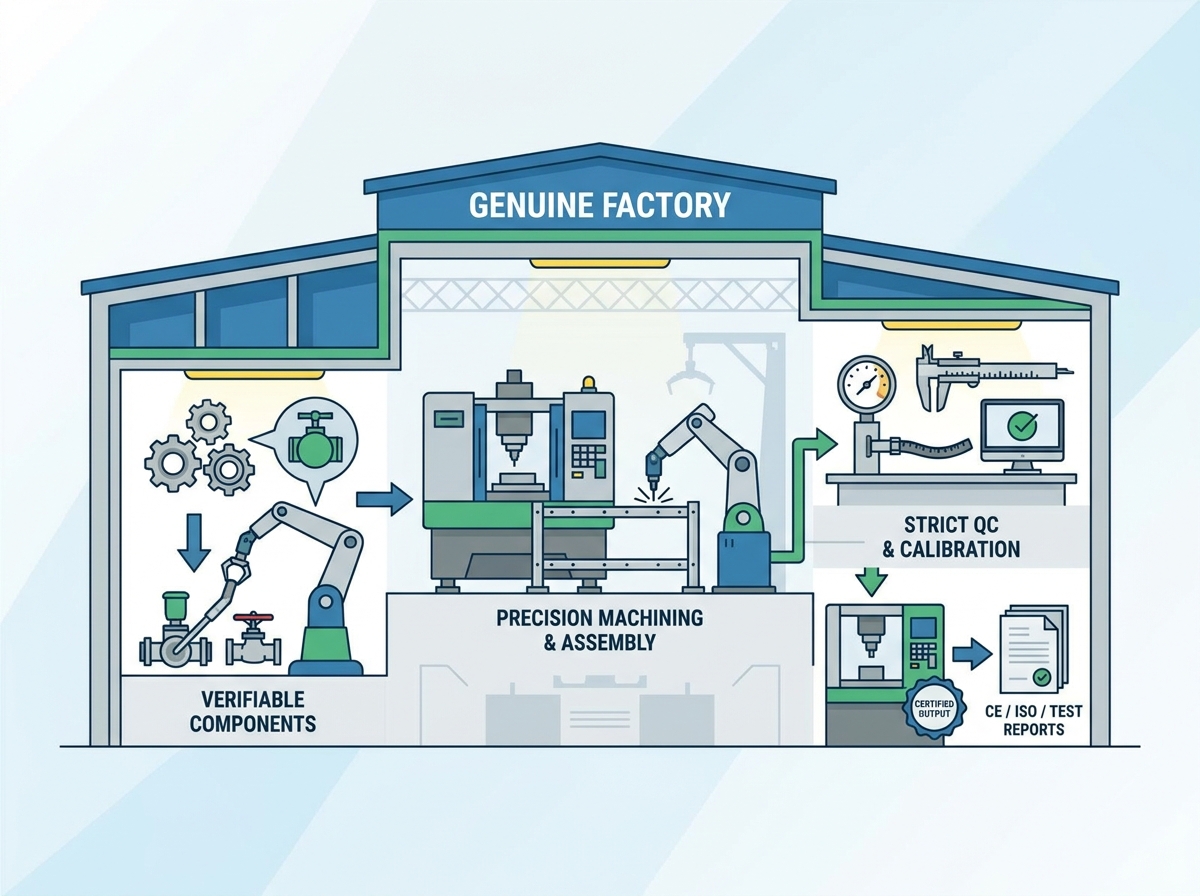
Marketing brochures rarely tell the whole truth about a machine's lifespan. You need absolute transparency regarding the internal hydraulic system. Evaluate whether the factory uses globally recognized, verifiable hydraulic components. Reputable suppliers proudly highlight their use of premium motors and directional valves. Subpar factories hide behind low-tier, undocumented alternatives. These cheap substitutes fail quickly under continuous industrial stress.
Metallurgy dictates the true capability of any crimping equipment. You must assess the heat-treatment processes applied to the crimping dies. Proper machining precision ensures these dies maintain exact dimensions over thousands of cycles. If a factory skips advanced hardening processes, the dies suffer rapid wear. Deformation eventually occurs, leading to dangerously loose hose fittings. Ask potential suppliers about their specific Rockwell hardness (HRC) standards.
Structural integrity serves as another crucial indicator of factory quality. Examine the frame build and the overall welding quality closely. A heavier machine usually indicates thicker steel plates and better durability. High-pressure operations generate immense internal stress. Flimsy frames will flex or crack under maximum working pressure. You want a massive, rigid structure capable of absorbing heavy vibrations safely.
Component Sourcing Tiers
Component Tier
Origin & Documentation
Expected Reliability
Factory Type Indicator
Premium / Tier 1
Recognized global brands (e.g., Rexroth, Parker). Full spec sheets provided.
Extremely high. Withstands continuous daily usage without overheating.
Direct Manufacturer focused on long-term industrial partnerships.
Standard / Tier 2
Reputable domestic brands with verifiable ISO certifications.
Moderate to high. Good for intermittent or standard daily use.
Value-oriented factory balancing cost and reliable performance.
Subpar / Tier 3
Unbranded, white-labeled, or no documentation available upon request.
Low. High risk of valve failure, fluid contamination, and motor burnout.
Trading company or low-end assembler cutting critical corners.
Strict Quality Control (QC) and Calibration Standards
Genuine factories treat quality control as an absolute science. They do not rely on visual inspections alone. You must demand hard evidence of comprehensive pre-shipment pressure testing. Reputable suppliers perform rigorous working pressure analysis before dispatching any unit. They subject the equipment to maximum load testing to ensure complete safety. If a factory cannot provide this testing data, walk away immediately.
Repeatability is the ultimate test of a high-quality crimper. You need the machine to deliver identical crimp diameters across high-volume production runs. Ask the factory how they verify these precise tolerance metrics. Do they use digital micrometers to check consecutive test crimps? The best manufacturers document a tight variance margin. They guarantee every single hose meets exact dimensional requirements.
Documentation separates professional manufacturers from amateurs. Never accept generic checkmarks on a basic piece of paper. You must request formalized Quality Control (QC) checklists containing actual numerical data. Pre-shipment inspection (PSI) reports should list the exact pressure readings achieved during testing.
Best Practices for Reviewing PSI Reports:
Cross-reference the serial number on the report with the actual machine plate.
Ensure the report lists the specific hydraulic oil temperature during the maximum load test.
Verify the exact die calibration measurements recorded by the inspector.
Check for signatures from both the assembly engineer and the lead QA manager.
Certifications, Compliance, and Industry Standards
Navigating the complex landscape of international certifications requires a highly skeptical eye. You must actively verify the operational standards claimed by the supplier. Check the authenticity of their ISO 9001 (Quality Management Systems) certificates. Do the same for their CE marks regarding safety standards. Never accept simple website badges at face value. Unscrupulous suppliers frequently download these logos from the internet.
You must ensure the machine produces fully compliant output. The equipment must be calibrated to create crimps meeting strict international hydraulic standards. These include crucial frameworks like SAE, DIN, and EN. If your assemblies fail these standards, your products become legally unviable. Ask the factory to demonstrate how their die specifications align directly with SAE or DIN hose dimensions.
Environmental and safety audits remain critical during the evaluation phase. Evaluate the factory's commitment to general worker safety on their own floor. A messy, unsafe factory floor usually translates to sloppy equipment assembly. Furthermore, check the machine for mandatory equipment fail-safes. The design must include easily accessible emergency stops. It should also feature robust pressure relief valves to prevent catastrophic hydraulic explosions.
Common Mistake: Accepting a CE certificate without checking the issuing body. Always verify the certificate number through the official database of the European notified body.
Assessing After-Sales Support and Implementation Risks
Post-sales support often determines the ultimate success of your equipment investment. Evaluate the technical documentation provided carefully. Assess the depth and clarity of their English-language user manuals. Poorly translated manuals cause severe operational confusion and safety hazards. You also need access to detailed electrical schematics and comprehensive troubleshooting guides. These documents allow your local technicians to resolve minor faults quickly.
The spare parts supply chain is another critical evaluation metric. You must evaluate the factory's inventory availability thoroughly. Ask about their standard shipping times for custom dies and replacement seals. A good manufacturer maintains a large stock of consumable parts. They can ship replacements via air freight within 48 hours. If they custom-machine parts only upon request, you face weeks of costly downtime.
Test the manufacturer's technical support infrastructure before signing a contract. You need to know their engineering response time for complex issues. Send them a hypothetical hydraulic or electrical fault diagnosis scenario. Evaluate how quickly and accurately they respond. If you want to see how a professional team handles direct inquiries, contact us to experience responsive engineering support firsthand. A competent factory replies quickly with clear, actionable diagnostic steps rather than vague guesses.
Essential Spare Parts Checklist to Request:
Master die sets and standard replacement springs.
Complete hydraulic cylinder seal kits.
Replacement micro-switches and electrical relays.
Specialty magnetic die removal tools.
Shortlisting Logic: Red Flags and Next Steps
You must recognize critical red flags early in the negotiation process. Evasive answers regarding component origins should immediately disqualify a supplier. If they refuse to name their valve manufacturer, they are hiding cheap parts. Another massive red flag is the refusal to allow third-party factory audits. Reputable factories welcome inspectors from organizations like SGS or TÜV. Finally, avoid suppliers offering poorly defined warranty clauses. A strong warranty clearly outlines what parts fall under coverage.
The video audit has become an indispensable tool for remote procurement. You should request a live, verifiable video walkthrough of their facilities. Ask them to show you their CNC machining centers in action. Have them walk over to the assembly lines to prove actual manufacturing activity. This live interaction makes it nearly impossible for trading companies to fake factory ownership.
Never sign a bulk contract without conducting a rigorous pilot test first. Structuring a sample order minimizes your initial financial exposure. If a physical sample proves too expensive, request a custom video demonstration. Send them your specific hose and fitting parameters. Ask them to record a continuous, unedited video of their machine crimping your exact specifications. They should measure the final diameter on camera to prove precision.
Conclusion
Evaluating a hose crimping machine supplier remains a rigorous exercise in risk mitigation. You cannot afford to make decisions based solely on glossy brochures. We highly emphasize prioritizing long-term equipment reliability above all else. You must demand verifiable engineering standards from every potential vendor. Responsive technical support will always save you more money than the lowest initial price tag.
Take proactive steps to protect your operational efficiency today. Equip your procurement team with a standardized checklist for all vendor interviews. Demand transparency regarding component sourcing and quality control data. By adhering to these strict evidence-based frameworks, you guarantee safer assemblies and significantly reduce unexpected production downtime.
FAQ
Q: How can I tell if a supplier is a trading company or a direct hose crimping machine factory?
A: Request a live video call demonstrating their CNC machining centers and assembly lines. Direct factories gladly showcase their active manufacturing floor and raw material inventory. Trading companies often invent excuses to avoid live tours. Furthermore, check their business license scope and demand engineering-level answers regarding die metallurgy. Trading companies usually struggle with deep technical queries.
Q: What is the standard warranty period I should expect from a reputable manufacturer?
A: A highly reputable manufacturer typically offers a comprehensive 12-to-36-month warranty. This period should cover the main hydraulic cylinder, motor, and internal structural frame. However, consumable parts like standard dies or seals usually carry shorter coverage. Always demand a written warranty document detailing the exact terms, replacement shipping costs, and technical diagnostic procedures.
Q: Can a quality factory customize crimping dies for non-standard industrial applications?
A: Yes, genuine manufacturers excel at customization. They possess in-house CNC capabilities and engineering teams. You can provide them with specific CAD drawings or non-standard fitting dimensions. They will calculate the required heat treatment and machine custom die profiles to perfectly match your unique industrial applications. Trading companies generally only sell pre-packaged standard sets.
Q: What documentation should I request to verify the working pressure capabilities of the machine?
A: You must explicitly request a formalized pre-shipment inspection (PSI) report. This document must contain the actual numerical data recorded during maximum load and working pressure testing. Demand the digital micrometer readings from consecutive test crimps. Finally, ask for verifiable CE or ISO compliance certificates confirming the machine meets rigorous international safety and pressure thresholds.
Handanshi Kangmai Hydraulic Equipment Co., Ltd. is located in the east of Wangzhuang,on the Hanlin expressway. Our main products have 9 series and 50 types which contains hose crimping machine, hose cutting machine,hose skiving machine...