Contents
Introduction
Understanding the Role of a Nut Crimping Machine in Modern Manufacturing
Manual Nut Crimping Machines: Strengths, Limitations, and Ideal Use Cases
Automatic Nut Crimping Machines: Efficiency, Precision, and Scalability
Manual vs. Automatic Nut Crimping Machine: Side-by-Side Comparison
Key Factors to Consider When Choosing the Right Nut Crimping Machine
Application Scenarios: Matching Machine Type to Production Needs
Cost, Maintenance, and Long-Term Value Considerations
Conclusion
FAQ
Introduction
A Nut Crimping Machine plays a critical role in fastening operations where threaded inserts, clinch nuts, or similar components must be permanently and securely installed into metal or composite materials. As manufacturing environments evolve toward higher efficiency and tighter tolerances, the choice between manual and automatic solutions has become increasingly important. Selecting the right type of machine directly impacts production speed, labor requirements, consistency, and long-term operating costs. This article provides an in-depth comparison of manual and automatic nut crimping machines, helping decision-makers determine which solution aligns best with their technical requirements, production volume, and operational goals.
Understanding the Role of a Nut Crimping Machine in Modern Manufacturing
A Nut Crimping Machine is designed to apply controlled force to deform material around a nut or insert, creating a strong mechanical bond without welding or adhesives. This process is widely used in sheet metal fabrication, enclosure manufacturing, automotive components, electrical assemblies, and other industrial applications where durability and repeatability are essential.
Modern manufacturing places high demands on fastening accuracy and reliability. High precision Nut Crimping Machines ensure that every nut is installed with consistent force, preventing issues such as thread misalignment, material cracking, or pull-out failure. In high-volume environments, Industrial Nut Crimping Machines help standardize output while reducing dependency on operator skill.
The choice between manual and automatic systems often reflects broader production philosophies. Manual machines emphasize flexibility and operator control, while Automatic Nut Crimping Machines prioritize speed, repeatability, and integration with automated workflows. Understanding this foundational role clarifies why the decision matters far beyond the machine itself.
Manual Nut Crimping Machines: Strengths, Limitations, and Ideal Use Cases
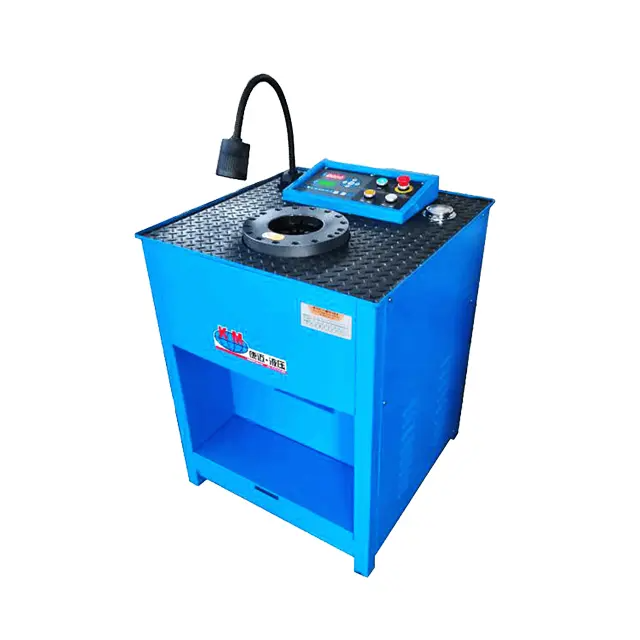
Manual Nut Crimping Machines rely on human operation to apply force, typically through a lever or hand-actuated hydraulic mechanism. These machines are valued for their simplicity, reliability, and low entry cost. In many workshops, a Hydraulic Nut Crimping Machine operated manually provides sufficient force for a wide range of fastening tasks without requiring electrical or pneumatic systems.
One of the main advantages of manual machines is control. Operators can feel resistance during the crimping process and adjust technique in real time, which is especially useful when working with varying material thicknesses or custom components. Manual machines also require minimal setup, making them ideal for short production runs, prototyping, or repair work.
However, manual systems have clear limitations. Output depends heavily on operator strength and consistency, which can lead to variability over time. Fatigue becomes a factor in repetitive tasks, reducing efficiency and increasing the risk of errors. While manual Heavy duty Nut Crimping Machines exist, they are not designed for sustained high-volume production.
Manual machines are best suited for low-to-medium volume environments where flexibility, affordability, and hands-on control outweigh the need for speed and automation.
Automatic Nut Crimping Machines: Efficiency, Precision, and Scalability
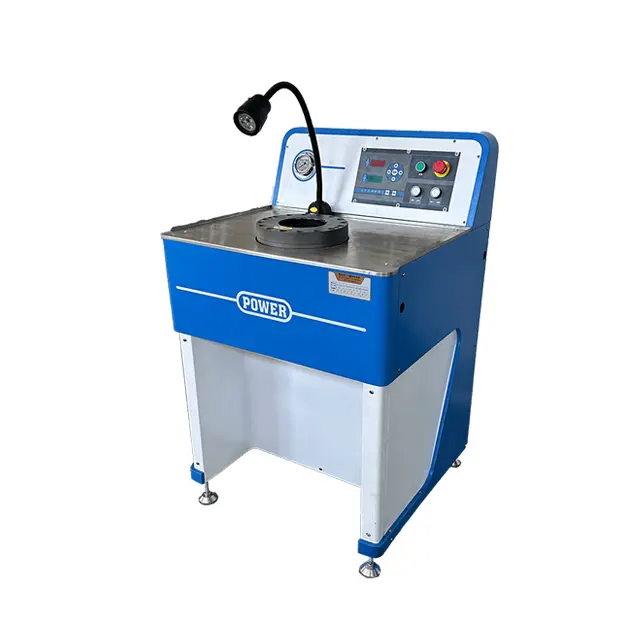
An Automatic Nut Crimping Machine is engineered to perform fastening operations with minimal human intervention. These systems typically use electric, pneumatic, or Hydraulic power combined with programmable controls to deliver precise and repeatable crimping force. Automation dramatically improves throughput and ensures uniform quality across large production batches.
One of the defining strengths of automatic machines is consistency. Once parameters such as force, stroke, and cycle time are set, every nut is installed under identical conditions. This makes High precision Nut Crimping Machines essential in industries with strict quality standards, such as automotive, electronics, and aerospace supply chains.
Automatic systems also support scalability. As production demand increases, an Industrial Automatic Nut Crimping Machine can operate continuously with minimal operator supervision. Many setups can be integrated into assembly lines or paired with feeding systems to further reduce labor input.
The primary trade-off is cost and complexity. Automatic machines require higher initial investment, more space, and technical expertise for setup and maintenance. Despite this, for operations focused on long-term efficiency and repeatable output, automation often delivers superior overall value.
Manual vs. Automatic Nut Crimping Machine: Side-by-Side Comparison
When deciding between manual and automatic solutions, a direct comparison helps clarify which option aligns with specific operational priorities. The table below highlights key differences between the two machine types.
| Feature | Manual Nut Crimping Machine | Automatic Nut Crimping Machine |
| Operation | Hand-operated or manual hydraulic | Fully or semi-automated |
| Production Speed | Low to moderate | High and consistent |
| Precision | Operator-dependent | High precision and repeatable |
| Labor Requirement | Continuous operator involvement | Minimal supervision |
| Initial Cost | Lower | Higher |
| Scalability | Limited | Excellent for Industrial use |
| Fatigue Impact | High in repetitive tasks | Very low |
| Best Use Case | Small batches, custom jobs | High-volume, standardized production |
This comparison underscores that neither option is universally superior. The right Nut Crimping Machine depends on how production demands balance flexibility, volume, precision, and cost.
Key Factors to Consider When Choosing the Right Nut Crimping Machine
Selecting between manual and automatic equipment requires a structured evaluation of several critical factors. Production volume is often the first consideration. Low output environments rarely justify the investment in automation, while high output operations struggle to remain competitive without it.
Precision requirements also matter. If product specifications demand tight tolerances and consistent fastening strength, an Automatic High precision Nut Crimping Machine significantly reduces quality risks. Conversely, if variations are acceptable and components differ frequently, manual systems provide adaptability.
Workforce considerations play a role as well. Manual machines rely on skilled operators, whereas automatic machines shift skill requirements toward setup and monitoring. Energy availability, floor space, and long-term growth plans should also influence the decision.
By evaluating these factors holistically, manufacturers can avoid over- or under-investing in a Nut Crimping Machine that does not align with their operational reality.
Application Scenarios: Matching Machine Type to Production Needs
Different industries and production scenarios naturally favor different machine types. In custom metal fabrication shops, manual Hydraulic Nut Crimping Machines allow operators to switch between jobs quickly without extensive reconfiguration. These environments value versatility over speed.
In contrast, large-scale manufacturing lines assembling enclosures, panels, or structural components benefit from Automatic Heavy duty Nut Crimping Machines. Automation ensures that every unit meets the same fastening standard, supporting downstream assembly and quality inspection processes.
Hybrid scenarios also exist. Some facilities use manual machines for prototyping and low-volume orders while reserving automatic systems for mass production. This dual approach maximizes flexibility while preserving efficiency where it matters most.
Understanding where and how the machine will be used ensures that the chosen Nut Crimping Machine supports actual workflows rather than theoretical advantages.
Cost, Maintenance, and Long-Term Value Considerations
Initial purchase price is only one component of total ownership cost. Manual Nut Crimping Machines are less expensive upfront and easier to maintain due to their mechanical simplicity. Downtime is minimal, and repairs are typically straightforward.
Automatic machines, while more expensive, often deliver better long-term value in high-volume environments. Reduced labor costs, higher output, and lower rejection rates can offset the initial investment over time. Preventive maintenance is more structured but also more predictable.
From a strategic perspective, companies planning growth should consider future needs. Investing early in an Industrial Automatic Nut Crimping Machine can prevent bottlenecks later, whereas manual systems may become limiting as demand increases.
Conclusion
Choosing between manual and automatic solutions is not about identifying a universally better option but about aligning technology with production goals. A manual Nut Crimping Machine offers flexibility, affordability, and hands-on control, making it ideal for small-scale or variable operations. An Automatic Nut Crimping Machine, on the other hand, excels in speed, precision, and scalability, supporting consistent output in demanding industrial environments.
By carefully evaluating production volume, quality requirements, labor structure, and long-term strategy, manufacturers can confidently select the nut crimping solution that delivers both immediate performance and sustainable value.
FAQ
1.What is the main difference between manual and automatic Nut Crimping Machines?
The primary difference lies in operation and output. Manual machines depend on operator effort, while automatic machines use powered systems to deliver consistent, high-speed crimping.
2.Are automatic Nut Crimping Machines more accurate?
Yes, High precision Automatic Nut Crimping Machines provide consistent force and positioning, reducing variability and quality defects.
3.Can a manual Nut Crimping Machine handle heavy-duty applications?
Some Heavy duty manual or Hydraulic Nut Crimping Machines can handle demanding tasks, but they are not ideal for sustained high-volume production.
4.Which option is better for long-term industrial use?
For continuous, large-scale production, an Industrial Automatic Nut Crimping Machine typically offers better efficiency and long-term cost effectiveness.
5.Is it possible to use both types in one facility?
Yes, many manufacturers combine manual and automatic machines to balance flexibility and efficiency across different production needs.


