Contents
Introduction
Understanding Hose Skiving and Its Role in Hose Assembly
Why Internal Hose Skiving Matters for Performance and Safety
The Importance of External Hose Skiving in Reliable Connections
Internal vs. External Hose Skiving: Key Differences and Use Cases
Equipment and Technology Behind Modern Hose Skiving
Common Challenges, Best Practices, and Quality Control in Hose Skiving
Future Trends and Process Optimization in Hose Skiving
Conclusion
FAQ
Introduction
Hose Skiving is a precision process that plays a decisive role in the reliability, safety, and lifespan of hose assemblies used across demanding industrial environments. Whether hoses are exposed to high pressure, aggressive fluids, or constant vibration, the quality of the skiving process directly affects how well fittings bond to the hose structure. This guide focuses on why both internal and external skiving matter, how they differ, and how manufacturers and maintenance teams can apply best practices to achieve consistent, high-performance results.
Understanding Hose Skiving and Its Role in Hose Assembly
At its core, Hose Skiving is the controlled removal of rubber or thermoplastic material from a hose’s inner tube, outer cover, or both, to expose the reinforcement layer. This step ensures that fittings make direct, secure contact with the hose’s structural components rather than compressible outer layers. In real-world applications, skiving is not an optional finishing step but a functional requirement for many hose types, especially those operating under high pressure or severe mechanical stress.
The relevance of skiving becomes clearer when viewed as part of the entire hose assembly workflow. Cutting, skiving, fitting insertion, and crimping are interdependent steps. Inadequate skiving can compromise even the most precise crimping operation. For example, insufficient material removal may prevent proper fitting engagement, while excessive skiving can weaken the hose body. This balance explains why industrial environments rely on calibrated processes and tools such as Hydraulic hose skiving machine systems or Industrial hose skiving machine setups to maintain consistency.
Beyond mechanical fit, skiving influences long-term reliability. Properly exposed reinforcement layers help distribute stress evenly along the fitting interface, reducing localized fatigue. In safety-critical systems—such as hydraulic circuits or fluid transfer lines—this directly translates into reduced downtime and lower risk of catastrophic failure. Understanding skiving as a structural preparation step rather than a cosmetic one is essential to appreciating its true value.
Why Internal Hose Skiving Matters for Performance and Safety
Internal skiving focuses on removing material from the inner tube of a hose to ensure unobstructed flow and precise fitting alignment. In high-pressure systems, even minor inconsistencies inside the hose can lead to turbulence, pressure drops, or premature wear. By applying Hose Skiving internally, technicians create a uniform inner diameter that allows fittings to seat correctly without deforming the hose tube.
From a safety perspective, internal skiving reduces the likelihood of micro-gaps between the fitting and the hose interior. These gaps are common initiation points for leaks, especially when the system experiences pressure spikes or thermal cycling. Using an Internal and external hose skiving tool designed for controlled depth and angle helps maintain repeatable results across batches.
Internal skiving is particularly critical in hydraulic applications where fluid velocity and pressure stability are tightly regulated. In such cases, combining precise internal skiving with accurate crimping improves sealing efficiency and extends service life. While portable solutions like portable hose skiving equipment are often used for field repairs, factory environments may favor automated or semi-automated machines to minimize human error.
The key takeaway is that internal skiving is not merely about material removal. It is about creating predictable internal geometry that supports fluid dynamics, fitting integrity, and system safety under continuous operation.
The Importance of External Hose Skiving in Reliable Connections
External skiving removes the outer cover of a hose to expose the reinforcement layer, allowing fittings to grip the hose structure directly. This step is essential when fittings are designed to clamp onto reinforcement rather than compress the outer rubber layer. Without proper external skiving, the fitting may appear secure initially but loosen over time due to material creep or environmental degradation.
In practice, external Hose Skiving enhances mechanical interlock. By exposing reinforcement, the crimping force is transferred to a stable layer that resists deformation. This is especially important in applications involving vibration, bending, or frequent pressure fluctuations. High-output environments often rely on High speed hose skiving solutions to maintain throughput without sacrificing precision.
External skiving also supports inspection and quality control. A cleanly skived surface makes it easier to verify reinforcement integrity and detect defects before assembly. In large-scale operations, integrating external skiving into a standardized workflow reduces variability between assemblies, a key factor in meeting compliance and safety standards.
Ultimately, external skiving ensures that the hose-fittings interface behaves as a single, unified structure. This structural continuity is what enables hoses to perform reliably in harsh operating conditions over extended periods.
Internal vs. External Hose Skiving: Key Differences and Use Cases
While internal and external skiving share the same goal of improving fitting performance, their applications and technical considerations differ significantly. Internal skiving primarily affects fluid flow and sealing, while external skiving influences mechanical retention and environmental resistance. Understanding when and why to apply each method is essential for optimized hose assembly.
The following table highlights the core differences:
| Aspect | Internal Skiving | External Skiving |
| Primary Purpose | Improve internal fit and flow | Enhance mechanical grip |
| Material Removed | Inner tube | Outer cover |
| Key Benefit | Leak prevention, flow stability | Strong fitting retention |
| Typical Applications | Hydraulic and fluid systems | High-vibration or high-pressure systems |
In many cases, both methods are used together. Advanced operations may employ a CNC high precision hose skiving machine to control internal and external skiving parameters in a single setup. This integrated approach reduces setup time and ensures alignment between skiving depth and fitting design.
Choosing the correct skiving strategy depends on hose construction, fitting specifications, and operating conditions. Treating internal and external skiving as complementary rather than competing processes leads to more robust and reliable assemblies.
Equipment and Technology Behind Modern Hose Skiving
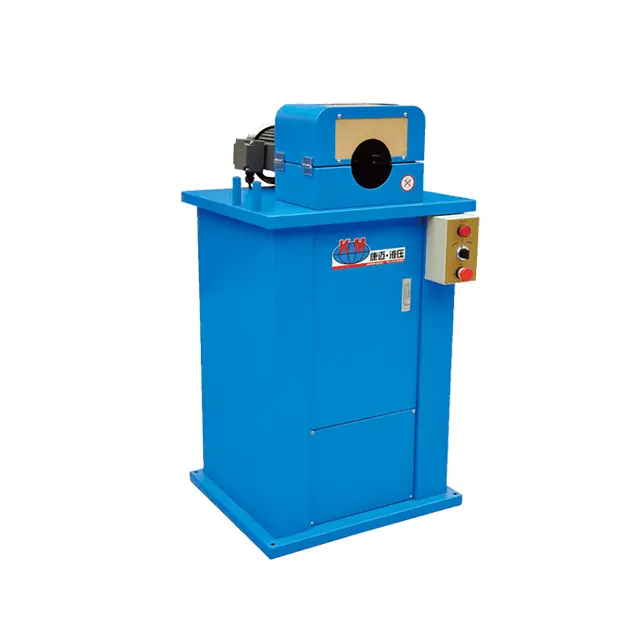
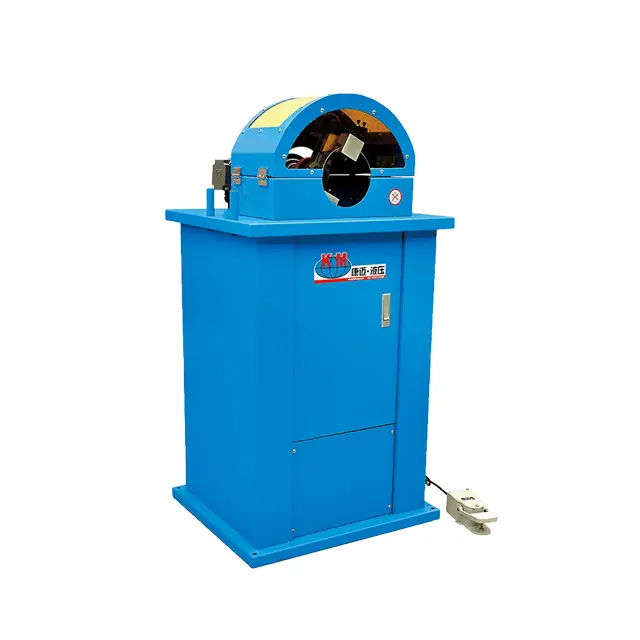
Modern Hose Skiving relies on specialized equipment designed to deliver repeatable precision. Manual tools are still used for low-volume or on-site work, but most industrial environments favor mechanized solutions. Machines such as Industrial hose skiving machine systems provide adjustable depth control, stable cutting speeds, and consistent results across large production runs.
Technological advancements have also improved efficiency and safety. Automated feed mechanisms reduce operator fatigue, while enclosed cutting zones minimize debris exposure. In high-volume settings, High speed hose skiving capabilities allow manufacturers to maintain productivity without compromising accuracy.
Portability is another key consideration. Maintenance teams often rely on portable hose skiving equipment for field repairs, balancing flexibility with sufficient precision. Meanwhile, fixed installations may integrate skiving machines into automated assembly lines for end-to-end hose preparation.
Selecting the right equipment involves evaluating hose types, production volume, and required tolerances. The goal is not simply faster skiving, but controlled, repeatable material removal that aligns with downstream processes.
Common Challenges, Best Practices, and Quality Control in Hose Skiving
Despite its importance, Hose Skiving presents several challenges. Over-skiving can weaken the hose, while under-skiving may prevent proper fitting engagement. Tool wear, inconsistent operator technique, and material variability all contribute to quality issues if not managed carefully.
Best practices focus on standardization and inspection. Establishing clear skiving depth guidelines, regularly calibrating equipment, and training operators to recognize correct reinforcement exposure are essential steps. Quality control checks should include visual inspection and dimensional verification before assembly continues.
Environmental factors also matter. Temperature fluctuations can affect material hardness, altering skiving behavior. Adjusting cutting parameters accordingly helps maintain consistency. By treating skiving as a controlled manufacturing process rather than a preparatory task, organizations can significantly reduce rework and failure rates.
Future Trends and Process Optimization in Hose Skiving
The future of Hose Skiving is shaped by automation, data-driven control, and integration with digital manufacturing systems. Smart machines capable of monitoring cutting force and depth in real time are becoming more common, enabling adaptive adjustments during operation.
Process optimization increasingly focuses on reducing waste and improving traceability. Advanced systems log skiving parameters for each assembly, supporting root-cause analysis when failures occur. As materials evolve, skiving tools and methods must adapt to new hose constructions without compromising efficiency.
These trends point toward a more holistic view of skiving—as an intelligent, integrated process that contributes directly to system reliability and operational excellence.
Conclusion
Hose Skiving is a foundational process that determines how well hose assemblies perform under real-world conditions. By understanding the distinct roles of internal and external skiving, selecting appropriate equipment, and applying disciplined quality control, manufacturers and maintenance teams can achieve safer, longer-lasting connections. Internal and external skiving are not optional steps but essential contributors to performance, reliability, and safety across industrial applications.
FAQ
1.What happens if hose skiving is skipped?
Skipping skiving can lead to poor fitting engagement, increased leak risk, and reduced hose lifespan.
2.Is internal or external skiving more important?
Both are important, serving different purposes. Many applications require a combination of both.
3.Can portable skiving tools deliver industrial-level accuracy?
When properly maintained and used within their limits, portable tools can achieve reliable results for field work.
4.How often should skiving equipment be calibrated?
Calibration frequency depends on usage volume and material type, but regular checks are essential for consistent quality.


